
By PAUL WISEMAN, AP Economics Writer
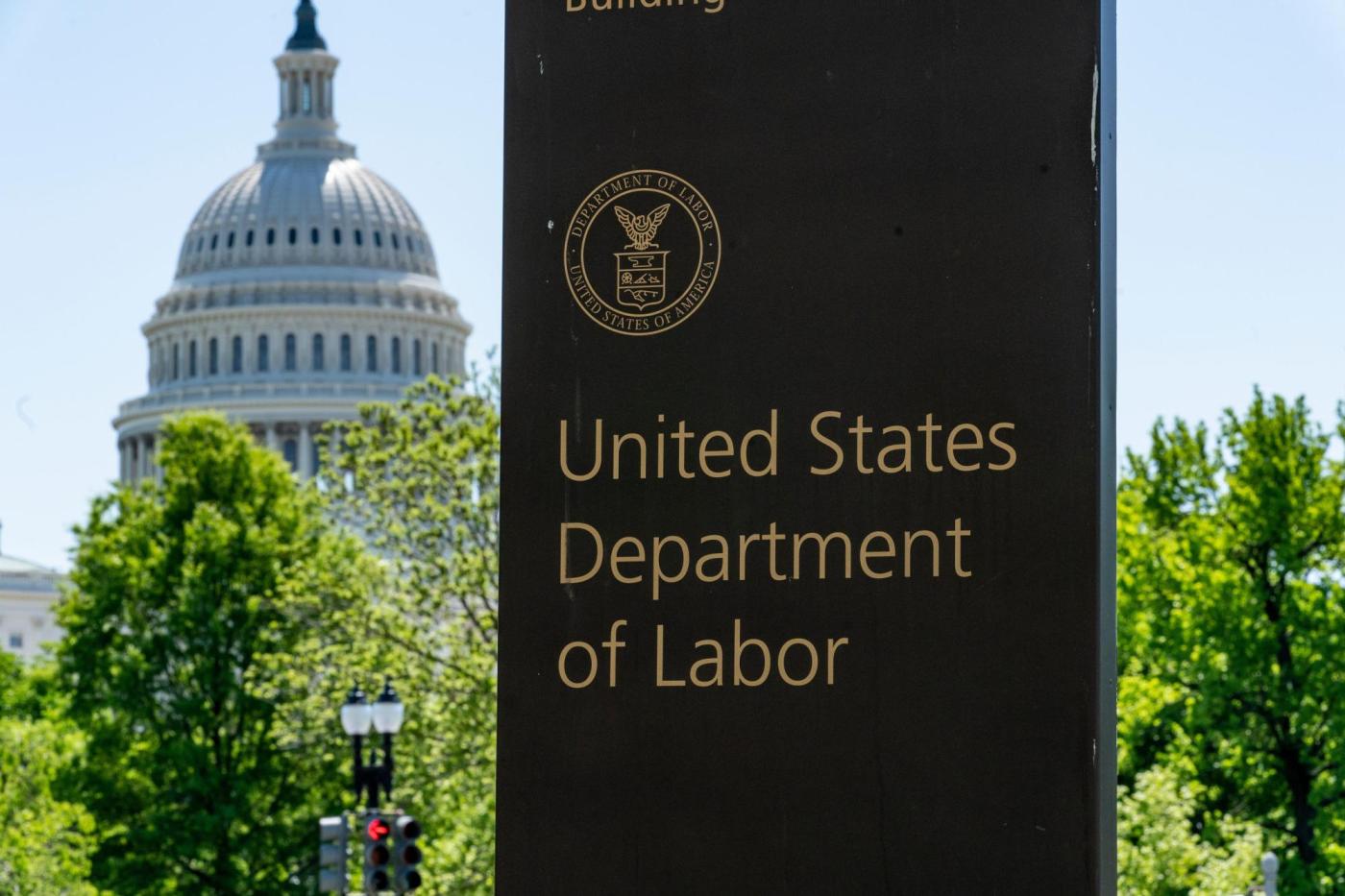
WASHINGTON (AP) — The United States gained a decent 64,000 jobs in November but lost 105,000 in October as federal workers departed after cutbacks by the Trump administration, the government said in delayed reports.
The unemployment rate rose to 4.6% last month, highest since 2021.
The November job gains were higher than the 40,000 economists had forecast. The October job losses were caused by a 162,000 drop in federal workers, many of whom resigned at the end of fiscal year 2025 on Sept. 30 under pressure from billionaire Elon Musk’s purge of U.S. government payrolls.
Labor Department revisions also knocked 33,000 jobs off August and September payrolls.
Hiring has clearly lost momentum, hobbled by uncertainty over President Donald Trump’s tariffs and the lingering effects of the high interest rates the Fed engineered in 2022 and 2023 to rein in an outburst of inflation. Since March, job creation has fallen to an average 35,000 a month, compared to 71,000 in the year ended in March.
Both the October and November job creation numbers, released Tuesday by the Labor Department, came in late because of the 43-day federal government shutdown. Those delays have made deliberations more difficult at the Federal Reserve, where policymakers are divided over whether the labor market needs more help from lower interest rates.
Worries about the job market were enough to nudge the Fed into cutting its benchmark interest rate by a quarter of a percentage point last week for the third time this year. But three Fed officials refused to go along with the move, the most dissents in six years. Two voted to keep the rate unchanged while inflation remains above the central bank’s 2% target. Stephen Miran, appointed by Trump to the Fed’s governing board in September, voted for a bigger cut – in line with what the president demands.
Tuesday’s report shows that “the labor market remains weak, but the pace of deterioration probably is too slow to spur the (Fed) to ease again in January,″ Samuel Tombs, chief U.S. economist at Pantheon Macroeconimics, wrote in a commentary. The Fed holds its next policy meeting Jan. 27-28.
The unemployment rate, though still modest by historical standards, has risen since bottoming out at a 54-year low of 3.4% in April 2023. It rose from 4.4% in September, and the number of people in the labor force – those working or looking for work – increased 323,000 from September. A rate for October was not available because of the shutdown.
Kevin Hassett, director of the White House National Economic Council, said that those pickups likely reflect former federal workers searching for new jobs. “Probably what’s going on is the 250,000 federal government workers who took the buyout are staying in the labor force and looking for work” and are therefore counted as unemployed until they find new jobs, Hassett told reporters.
The latest jobs figures could decline in the coming months. Last week, Fed Chair Jerome Powell said that the central bank thinks that hiring has been overcounted by about 60,000 jobs a month since spring. “You can say that the labor market has continued to cool gradually, maybe just a touch more gradually than we thought,” Powell said at a news conference.
Workers’ average hourly earnings rose just 0.1% from October, the smallest gain since August 2023. Compared to a year earlier, pay was up 3.5%, the lowest since May 2021.
Health care employers added more than 46,000 jobs in November, accounting for more than two-thirds of the 69,000 private sector jobs created last month. Construction companies added 28,000 jobs. Manufacturing shed jobs for the seventh straight month, losing 5,000 jobs in November.
“The takeaway is that the labor market remains on a relatively soft footing, with employers showing little appetite to hire, but are also reluctant to fire,” Thomas Feltmate, senior economist at TD Economics, wrote in a commentary. “That said, labor demand has cooled more than supply in recent months, which is what’s behind the steady upward drift in the unemployment rate.’’
Adding to the uncertainty is the growing use of artificial intelligence and other technologies that can reduce demand for workers.
“We’re in Lehigh Valley, which is a big transportation hub in eastern Pennsylvania,” said Matt Hobbie, vice president of the staffing firm HealthSkil in Allentown. “We’ve seen some cooling in the logistics and transportation markets, specifically because we’ve seen automation in those sectors, robotics.’’
Because of the government shutdown, many agencies are playing catch-up with economic data.
Related Articles
Don’t settle for a subpar health savings account
Ford scraps F150 Lightning as mounting losses and falling consumer interest hits EV plans
Downtown St. Paul: U.S. Bank Center auction delayed
Trump’s promised big tax cuts are expected to disappoint the average worker
Flour Chicks Bakery in Nevis, Minn., makes thousands of sweet snacks
The Labor Department finally put out the September jobs report on Nov. 20, seven weeks late. It published some of the October data – including a count of the jobs created that month by businesses, nonprofits and government agencies – along with the November report Tuesday.
American companies are mostly holding onto the employees they have. But they’re reluctant to hire new ones as they struggle to assess how to use artificial intelligence and how to adjust to Trump’s unpredictable policies, especially his double-digit taxes on imports from around the world.
The uncertainty leaves jobseekers struggling to find work.
In May, Amy Beckrich, 54, of Farmington, Minnesota, lost her human relations job at a consulting firm. She’s since applied for more than 100 positions. Even landing interviews is difficult. She finally got one, waited 20 minutes – and the recruiter never showed up
Her unemployment benefits ran out this month. “It’s tough going into the holidays without any prospects or income,’’ she said. Her husband is still employed, but they’ve had to cut back. They’ve put off replacing their car and rarely go out to eat anymore.
“I feel like the hiring system is broken,’’ she said. “The human factor has completely disappeared.’’
AP Economics Writer Christopher Rugaber and AP Writer Josh Boak contributed to this story.
Leave a Reply