
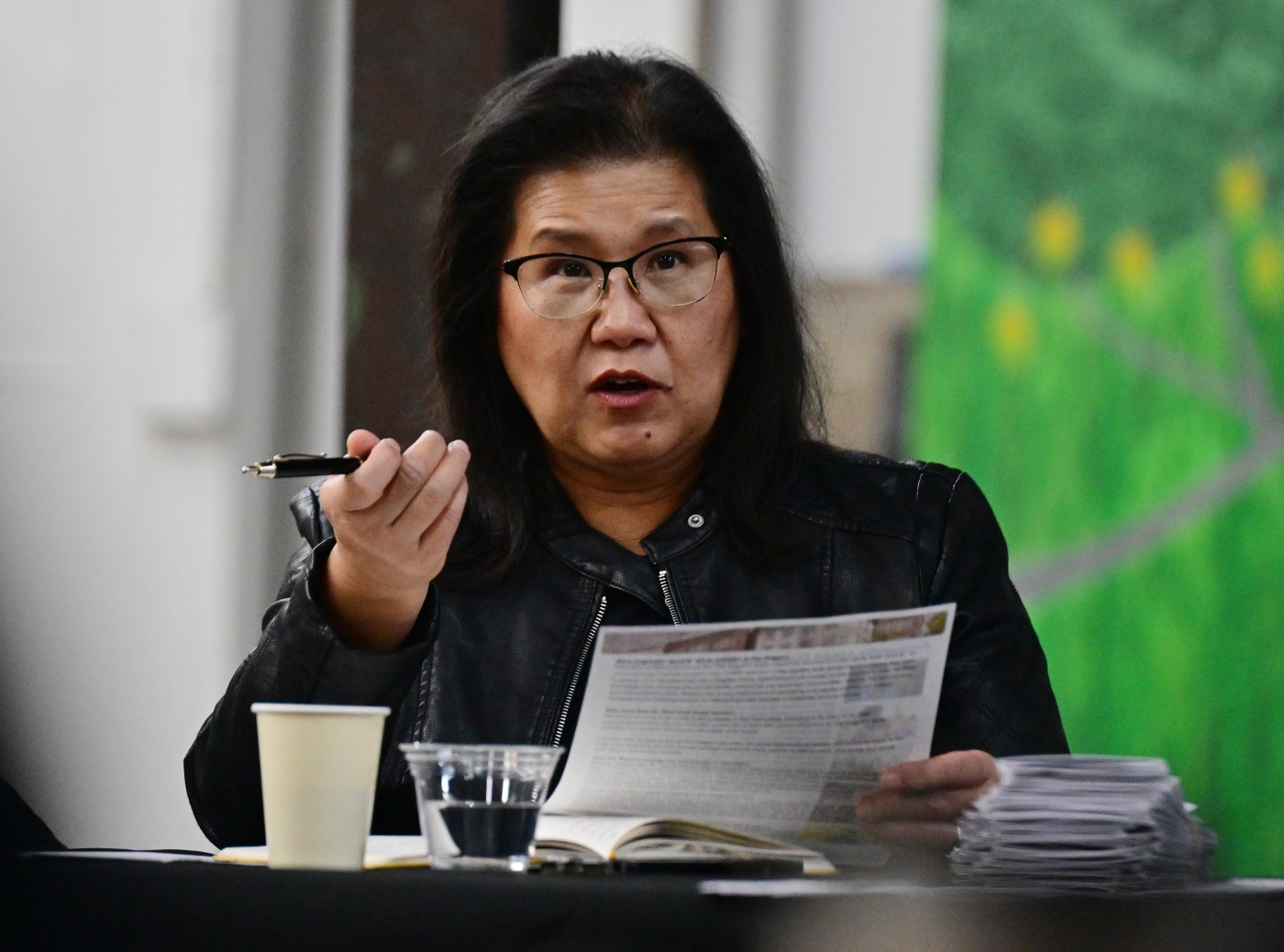
The inauguration of Kaohly Vang Her as mayor of St. Paul is a moment of transformation. She is the first Hmong woman elected mayor of a major American city, a powerful testament for a community that only two generations ago arrived in Minnesota as refugees. That’s not all. Her’s defeat of an incumbent widely expected to win — and by a large margin — demonstrated that voters want to upend the city’s political establishment and its clubby back-patting and favor-trading habits.
The mayor-elect enters office at a time of crisis in Minnesota’s Capitol City. The departure of businesses and residents swelled the commercial vacancy rate downtown to among the highest in the region and well above pre-pandemic levels, reflecting a slower recovery than many peer cities. On key indicators of downtown vitality — commercial occupancy, business activity, and tax-base stability — St. Paul has consistently lagged behind comparable mid-sized U.S. cities. All of St. Paul is bearing the cost: as the number of downtown businesses has plummeted, pressure has shifted onto homeowners through higher property taxes.
Only a bold and ambitious launch by Mayor Her on her first days in office can create the momentum to revitalize St. Paul.
Here’s a big bang: Announce a four-year campaign to raise $400 million in public and private funds to finance downtown revitalization. The declaration will itself light up the sky and inject energy and interest into Mayor Her’s administration. The funds will, in turn, equip the mayor to incentivize the formation of partnerships and to coax change from the usual St. Paul standpatters who prefer the status quo or expect deals to secure their support.
Sound pie-in-the-sky? Not for Kaohly Her, whose 15-year career prior to public service was as a successful businesswoman in the investment and finance sector. The mayor’s unique skills can empower St. Paul to pursue what was previously unimaginable and unmistakably demonstrate Mayor Her’s ability to revitalize St. Paul.
Next up: Mayor Her needs to declare an audacious agenda for her first 100 days to stop the slide in St. Paul and launch a new era of vitality, responsiveness and economic optimism.
Here are three catalysts for change.
Open for business
Small business owners, builders, and homeowners are steamed up by the cumbersome and time-consuming process of receiving permits from the city. St. Paul’s laborious slog adds to the costs of building and chases away businesses. When businesses don’t leave the state, they may prefer Woodbury, Eagan and Roseville, which move much faster and with less hassle. Minneapolis has built a larger and more advanced permitting process, making it more “business friendly” in the eyes of property owners and developers.
Mayor Her can create a faster, simpler process in her first 100 days if she makes it a priority. She doesn’t need massive new spending or sweeping legislation to get started. On her first day, the new mayor can issue an executive order that declares a new expectation of 30-day approval for standard permits, a one-stop permit office to cut through the red tape, a new requirement that all relevant departments review applications simultaneously to avoid infuriating run-arounds, and a new Chief Permit Officer who answers directly to the mayor for meeting the new deadlines and achieving simplicity.
Sound impossible? Apparently it isn’t. Cities around the country have turned around their laborious permitting systems. St. Paul can too.
Economic vitality will follow. Private developers in St. Paul, including the Ryan Companies and Schafer Richardson, along with housing nonprofits such as Aeon and CommonBond are eager to build, rehab, and reinvest. But they need a city that keeps up. Reliable 30-day approvals would jump-start stalled housing projects, accelerate storefront reopenings and return responsiveness to City Hall.
‘Safe, clean, open’ downtown
Large sections of downtown are empty, uncared for, and unsafe. Walking along Wabasha or through the skyways is unsettling. Nothing threatens St. Paul’s future more. Disgust with the city reached the point that residents have taken matters into their own hands by creating “Downtown Improvement Districts” and paying out of pocket for safety services, sidewalk cleaning and the removal of graffiti.
The experiences of the Downtown Improvement Districts along with planning by the Saint Paul Downtown Alliance hand Mayor Her a playbook for quick, visible and practical actions to reclaim downtown in her first 100 days. New lights to illuminate once dark corridors and skyways, removal of foul graffiti and the deployment of welcome ambassadors are starting points. Storefronts that sit vacant and currently generate no revenue can be converted into short-term, rent-free sites for pop-up art and restaurant operations that bring people downtown and begin to make downtown feel alive again.
Milwaukee and Detroit started to reverse their declines by making “safe, clean, and open” their new welcome mat. When streets feel lively and well-lit, crime drops. When storefronts look active, businesses return. When downtown appears cared for, residents regain trust.
Fast-tracking 3 prime targets for office-to-housing conversions
It is time for City Hall to accept the reality that the 2019 market for office space is gone – and move on. The public-private tag team of the St. Paul Downtown Alliance and the Saint Paul Downtown Development Corporation have identified three prime candidates for converting former office space into new housing: the Landmark Towers, U.S. Bank Center, and the Lowertown property on 180 East Fifth. Starting these conversions, which have empty space and flexible designs, will inject economic vitality and begin the process of bringing residents and businesses back along with downtown’s tax base.
Related Articles
What should St. Paul Mayor-elect Kaohly Her focus on in 2026?
How will Kaohly Her’s legislative career shape her leadership of St. Paul?
Joe Spencer: St. Paul’s budget signals bold push for a stronger downtown
St. Paul: Development Corp. buys vacant Empire Building, Endicott Arcade
Mayor Her can be a catalyst for change at the beginning of her term by targeting these three prime properties for conversion, expediting the approval of early-stage plans, and encouraging developers and property owners to reach agreement.
Of course, office building conversions will require more than 100 days but the mayor can deliver visible momentum: interior demolitions, new building permits, and the erecting of inconvenient — but heartening — fencing for redevelopment.
St. Paul’s challenge isn’t simply coming up with plans. Those exist. What has been missing is energetic and resourceful leadership that makes downtown redevelopment a top priority. Transforming St. Paul’s lackadaisical permit process, cleaning up downtown and starting to convert offices to housing are realistically achievable within Mayor Her’s first 100 days. The mayor can reform the permit process by using her own authority, kick-start the clean-up by broadening the scope of the Downtown Improvement Districts and teeing up housing conversions for action.
These aren’t grand promises for someday — they’re practical steps Mayor Her can take on her first day. Results will start to appear quickly.
Larry Jacobs, St. Paul, is director of the Center for the Study of Politics and Governance at the University of Minnesota.
Leave a Reply