
“To create real opportunities, we need two parties entering negotiations with the same goal in mind—the sale of the building to a non-profit or a direct sale to tenants.”
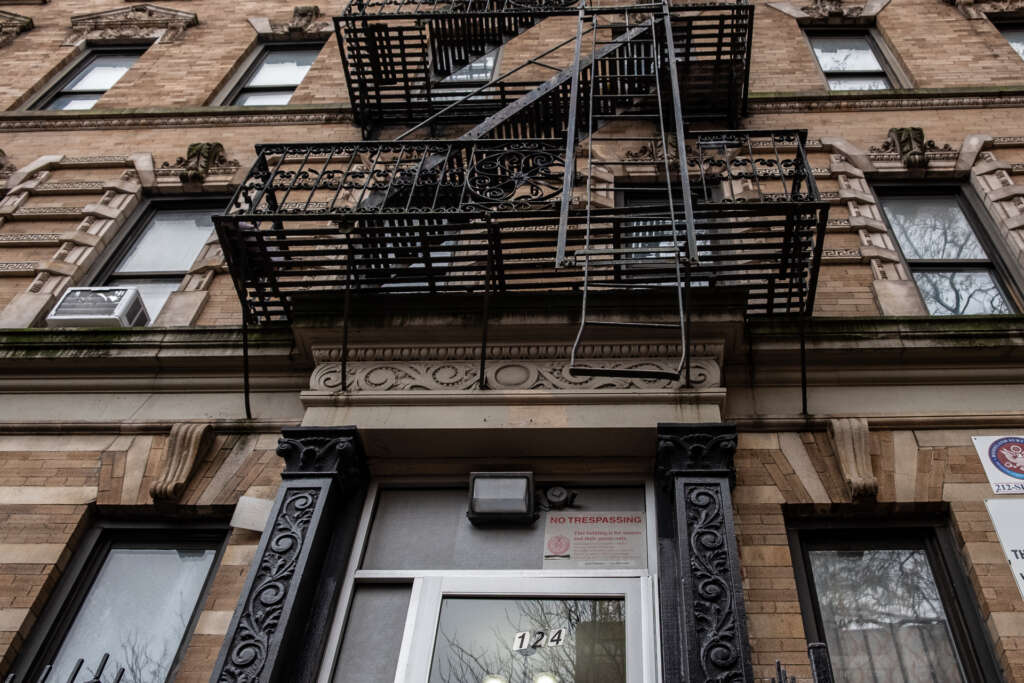
Apartments in East Harlem. (Adi Talwar/City Limits)
Throughout my career, I have been a huge supporter of empowering tenants to become homeowners, which is why it may seem odd that I do not support Intro. 902, or the Community Opportunity to Purchase Act (COPA). New York City absolutely needs to advance tenant and non-profit ownership, but I do not believe COPA is the way to achieve this laudable goal.
To create real opportunities, we need two parties entering negotiations with the same goal in mind—the sale of the building to a non-profit or a direct sale to tenants. This happens when parties begin negotiating voluntarily, usually with a confidentiality agreement in place to establish good faith.
COPA, on the other hand, tries to force parties into a negotiation and does so without any protections for the owner, such as confidential treatment of information they must share—step number one in any private sale negotiation. Also, in the tenant purchases I have worked on, the parties negotiated a memorandum of understanding–something that took months to complete but nonetheless was a critical foundation for the tenants or the non-profit to feel comfortable negotiating with the owner. COPA does not afford this foundational step which is key for successful negotiations.
RELATED READING: Social Housing Bill Poised for Breakthrough in City Council
COPA also assumes that without a forced sale, there is not a single owner in New York City who would consider the sale of a building to a non-profit. Unbelievably, these owners exist, and I have worked with them in the past. Over the last few years, I have represented tenants, non-profits, and landlords on voluntary COPA deals. In all cases, the negotiations were long, complex, and, in some cases, they did not work out—not because the landlord did not want to sell the building, but due to lack of resources or lack of government support.
As drafted, COPA does not bring the necessary resources to the table for non-profits to cover their necessary capacity building and upfront costs, let alone funding for acquisition and repairs. Without money, these negotiations will not lead to building sales, so it begs the question why there is such a push for COPA.
And for the deals that did result in a sale to a non-profit, that is only half the battle. Transfer of a property to a non-profit does not address capital needs, so without subsidy, nothing will change for the tenants. Plus, most tenants do not want to simply trade one landlord for another. They want to become homeowners.
The American Dream is still alive, even in New York City. I know this is true because tenants call me wanting to know how to convert their building to a cooperative or condominium. When I go through the regulatory steps that make conversion extremely challenging, coupled with the lack of government resources to support cooperative and condominium conversions, they are disappointed. Homeownership is clearly a missing piece of the COPA dialogue.
At this time, the City Council should take a pause on trying to pass COPA. Instead, the incoming Mamdani administration should form a working group to discuss ways to pilot a voluntary COPA program—one that has ready, willing, and able participants and the financial resources needed to support non-profit capacity, as well as money for acquisition and renovations.
This pilot also needs to support homeownership, thereby creating options for cooperative and condominium conversions that make sense for the existing tenants. That means the New York Attorney General’s office should participate. The AG’s office also has the power to resurrect outdated tools such as CPS-3 to give tenants the ability to organize and explore potential conversions with relative ease, as well as ensure that the Real Estate Finance Bureau prioritizes these conversions so that they happen quickly and with as much tenant involvement as possible.
Until we do this, the COPA carrot will do nothing to advance affordable housing, but it will keep litigators remarkably busy for sure.
Erica F. Buckley is a partner at Nixon Peabody LLP.
The post Opinion: NYC’s COPA Bill Isn’t Ready for Primetime Yet appeared first on City Limits.
Leave a Reply