
By George Hobica, Tribune News Service
Did Dorothy Parker, the steadfast New Yorker and celebrated wit, once wisecrack that “L.A. is 72 suburbs in search of a city,” or is the quip merely attributed to her? Whatever the case, it is a fact that “Brave New World” author Aldous Huxley in 1925 called L.A. “nineteen suburbs in search of a metropolis,” both disparagements implying that the city is an amorphous amoeba without a nucleus.
Related Articles
Spirit, Frontier offer steep air travel discounts in Black Friday dogfight
Paris’ Louvre museum to increase ticket price for visitors from outside the EU
German Baumkuchen ‘tree cake’ survived a disaster and world wars to become a Japanese favorite
Preparing to study abroad requires knowing what might go wrong during and after the trip
Cruise lines unveil Black Friday, Cyber Monday deals
Why all the shade? Sgt. Joe Friday, played by Jack Webb in the 1960s crime procedural “Dragnet,” knows better when he informs us over the establishment shots, in his I’ve-seen-it-all monotone: “This is the city. Los Angeles, California.”
What we are seeing in those opening moments is downtown L.A., where Los Angeles began on September 4, 1781.
Downtown, in its golden age, was where people shopped in grand department stores (all gone now), worked in the booming fossil fuel industry for the likes of Standard Oil (its architecturally important headquarters still stands), and flocked to premieres in over a dozen ornate motion picture palaces (many of which you can still visit).
And although downtown has gone through boom and bust, today things are on the upswing and DTLA, in local shorthand, is the most sensible, economical, and convenient place to stay if you’re visiting for next summer’s FIFA World Cup, the 2028 Olympics and Paralympics or for many other reasons, especially if you don’t want to drive or take car services everywhere.
That’s because downtown is the most interesting and walkable part of L.A. County. Bonus: lodging costs are lower than in places such as West Hollywood or Beverly Hills. And more to the point, downtown is the hub of a growing public transportation network, allowing you to see the rest of L.A. without dealing with the city’s notorious traffic, for the bargain price of $1.75 per ride, or 75 cents (35 cents off-peak) if you’re a senior.
Now about that transit system.
Sure, L.A. is a great big freeway, like the song says, but before it was taken over by asphalt it was a great big streetcar line.
In fact, by the 1940s it had the most extensive network of urban rail in the world, over 1,100 miles of it.
That’s why the street urchin in 1988’s “Who Framed Roger Rabbit” asks the broke private detective played by Bob Hoskins, who joins him for a free ride on the rear bumper of a Downtown trolley, “Hey mister, ain’tcha got a car?” Hoskins is dismissive. “Who needs a car? We have the best public transportation system in the world.”
One of the film’s subplots involves the dismantling of that Pacific Electric Red Car system, by nefarious means, and its replacement with fume-belching buses.
But this isn’t the stuff of fiction.
In 1946 the U.S. Justice Department sued General Motors (they made buses, you see) and other conspirators for antitrust violations, accusing them of intentionally buying and destroying streetcar systems in L.A. and other cities.
One estimate puts the cost of rebuilding what they ruined in L.A. alone at $300 billion. The cost of completing the county’s much smaller urban rail system today — currently just six lines? It’s estimated at $120 billion but it will likely cost more.
Those six lines and their 107 stations (there will be a quiz!) are the A, C, E, and K, which are light rail, basically high-speed trolleys; and the B and D lines, which operate full-sized “heavy” subway trains.
Metro also runs 120 bus routes, many of them originating from downtown. There’s even a direct route to Disneyland, the 460, which takes about 90 minutes door to door.
That’ll be $1.75, please.
By the way, the treasurer of GM, who spearheaded the conspiracy, was fined less than that.
Many Angelenos have never used public transit. This is a fact some are proud of. That’s maddening because the system, small as it is, is actually pretty great. It’s new and it’s clean. The underground stations are really quite beautiful.
But the automobile is the preferred transportation here.
As you ride Metro aboveground you will pass freeways clogged with stop-and-go cars and feel superior and wise. So don’t listen to natives who insist you can’t get there by Metro, because they just don’t know.
A checkered past
But let’s be clear: downtown has had its ups and downs over the years.
Two years after Charlie Chaplin and partners opened their 2,214-seat United Artists movie palace cum office building on downtown’s Broadway, the center of the city’s nightlife, the stock market crashed.
And then came 15 years of Depression and war.
Federal policies, contrived by the highway lobby, the most powerful pressure group in Washington, encouraged the move from downtown to the suburbs by funding the Interstate Highway System, and providing GIs, returning from the Second World War, with subsidized loans to buy new homes in those suburbs.
The same suburbs that the urban rail system was meant to service, had it survived.
Population figures tell the story: In 1896, 100,000 people lived here. By 2000, just 28,000 did. Today, thanks to the construction of new luxury high-rises and the conversion of historically significant office buildings to residential, about 90,000 call downtown home.
I’m one of them.
Things are looking up again after the COVID shutdowns, a curfew, and other blows. The homeless situation is improving. Office workers have returned. High-end retail outlets, like Apple’s multimillion dollar renovation of the historic Tower Theatre (1927), have appeared.
And yet for some residents change isn’t happening fast enough and past setbacks have metastasized.
A friend, the very person who years ago had encouraged me to move to DTLA, blurted “Don’t talk to me about downtown! I’ve given up!” when I told him I was writing about the district. Had there been a phone to slam down he might have slammed it.
His reluctance to speak seemed to be trending. Hoping to get some commentary about where DTLA was heading, I left multiple voice mails, sent multiple texts, tried LinkedIn and email, everything but showing up in person (I considered it), but the DTLA Alliance (downtownla.com, which does a good job keeping the streets clean); the Central City Association of L.A. (ccala.org), which recently announced a 90-day plan to improve the area; and the Downtown Residents Association, whose mission is “to create a connected, caring, civically engaged urban community” (dtlara.org), did not get in touch.
And I get it. When earlier this year Samuel Patrick Groft, of no known address and the possessor of an impressive rap sheet, chainsawed down to stubs a dozen or so of our majestic Indian laurel fig trees (ficus microcarpa), I almost lost hope too. For his tree slaughter he’s being held on an unusually high $350,000 bail, about three times what’s typical for manslaughter in L.A. County. That’s how outraged people were.
For some it was the dozens of graffiti vandals who climbed a trio of abandoned luxury high-rises and defaced floor after floor, causing millions in damage. Once seen as a sign of downtown’s renaissance, they’re now called the Graffiti Towers, a local eyesore enjoying “worldwide infamy” as Cassy Horton, co-founder of the Residents Association, told the Los Angeles Times.
I mention all this in the spirit of full disclosure, but please don’t let it discourage you. There are just too many good reasons to base your stay here.
What follows is a guide to all the great things you can enjoy in downtown and all over L.A., on foot or by Metro, all without driving.
Within downtown proper
Many of L.A.’s best experiences require just a short walk or subway ride from your DTLA hotel (recommended for proximity to Metro: the Sheraton Grand Los Angeles, the Westin Bonaventure Hotel and Suites, the Wayfarer Downtown L.A., the historic Biltmore Los Angeles, and, if you’d like a fully-equipped gym and huge pool with that, The Los Angeles Athletic Club). Museums, only-in-L.A. shopping, live music, walking tours, the world’s shortest railway! You’ll never want to leave downtown:
The Grammy Museum Interactive exhibits and displays that immerse visitors in music history, technology, and pop culture. A or E to Pico Station or the B or D to 7th Street/Metro Center Station. (grammymuseum.org)
The Broad Museum The building itself is a work of art. Timed entrance tickets are free to book but not required. B or D to Civic Center/Grand Park station, or C or E to Grand Ave. Arts/Bunker Hill station. (broad.org)
Santee Alley 365 days a year rain or shine, this open-air passageway offers bargain-priced clothing, accessories, potions and lotions, toys, and gadgets from over 150 independent vendors. A to San Pedro Street station. (fashiondistrict.org/santee-alley)
The Museum of Contemporary Art Grand Avenue (MOCA) Known for its focus on American and European art created since 1940. B or D to Civic Center/Grand Park station (use Hill and 1st Street exit), or C or E to Grand Ave. Arts/Bunker Hill. (moca.org)
Walking tours The Los Angeles Conservancy offers two-hour walking tours year-round on Saturdays. Choose from Historic Downtown, Broadway and the Historic Theatre District, the Modern Skyline, the Biltmore Hotel, and Union Station. Tours leave from the Central Library, which also gives tours. B or D to Pershing Square station. (laconservancy.org)
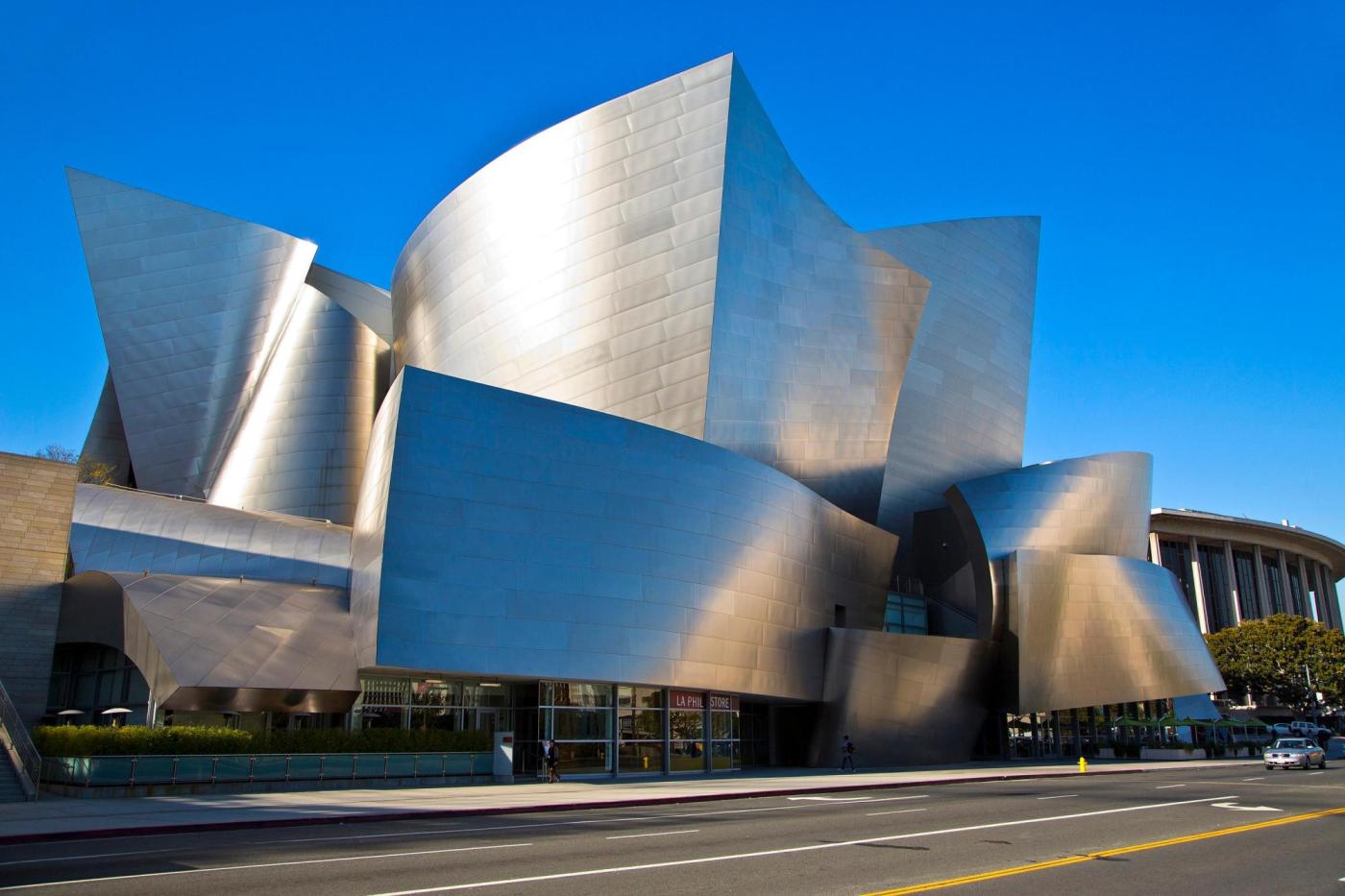
Disney Hall One of architect Frank Gehry’s many gems, home to the Los Angeles Philharmonic. Enjoy a concert, or guided tours are offered seasonally. C or E to Grand Ave. Arts/Bunker Hill station, or B or D to Civic Center/Grand Park station. (musiccenter.org)
The Last Bookstore 500,000 books. 22,000 square feet. Vinyl too. Largest in the state. Reputedly the most-photographed bookstore anywhere. B or D to Pershing Square station. (lastbookstorela.com/visit)
Angels Flight Railway This 118-year-old funicular takes passengers on a short ride between Hill Street and Grand Avenue on Bunker Hill. The lower terminus is near Grand Central Market. B or D to Pershing Square station or to Civic Ctr/Grand Park station if starting at the top. (angelsflight.org)
Grand Central Market The dozens of casual dining options at this long-running (1917) space attract hordes of locals and tourists. B or D to Pershing Square station. (grandcentralmarket.com)
Mariachi Plaza Especially on weekends, come to hear live Mariachi bands. E to Mariachi Plaza station. (mariachi-plaza.com)
El Pueblo de Los Angeles Historical Monument Historic site featuring a collection of 19th-century buildings, including the oldest house in Los Angeles and a Mexican marketplace with traditional crafts, food stalls, and occasional live performances. A, B or D to Union Station. (elpueblo.lacity.gov)
Geffen Contemporary at MOCA The only artist-founded museum in L.A., dedicated to collecting and exhibiting contemporary art. A or E to Little Tokyo/Arts District station (moca.org)
Japanese American National Museum The national repository of Japanese American history. Closed until late 2026. A or E to Little Tokyo/Arts District station (janm.org)
Chinatown Asian cuisine and shopping for bargain clothing, jewelry and collectibles. E to Chinatown station. (Chinatownla.com)
Little Tokyo All-you-can-eat sushi, dozens of independent stores, and the latest collectible crazes from Japan in a pleasant, walkable neighborhood. A or E to Little Tokyo/Arts District station. (littletokyola.org )
Rooftop dining Residents and visitors take advantage of downtown’s mild weather and skyline views by eating and drinking al fresco. Perch is perched atop the 1923 Pershing Square Building. A date-night/special occasion kind of place, it offers French classics. Spire 73, on the 73rd floor of the InterContinental Los Angeles Downtown, is the highest rooftop bar in the Western Hemisphere, and one of the highest in the world. Its dinner menu focuses on prime cuts of beef. B or D to Pershing Square station for both. (perchla.com, ihg.com)
Beyond downtown
While DTLA has much to experience, Metro can take you to many other places further afield — and to even more once the system is expanded over the next few years:
Los Angeles International Airport An easy journey to/from DTLA. Take Metro to/from Union Station and then connect to the FlyAway bus service or take Metro all the way. By January 2026, a new people mover will connect to the new LAX/Metro TransitCenter, taking passengers directly to terminals. Until then, E to the K or A to the C to the LAX/Metro station, then free shuttle bus to terminals. (flylax.com)
Frank Lloyd Wright’s Hollyhock House This is Wright’s first commission in L.A. The adjacent art park is also worth seeing. B to Vermont/Sunset station. (hollyhockhouse.org)
Santa Monica It’s 45 minutes to the famous Santa Monica Pier and the popular farmers market. E to Santa Monica station. (santamonica.gov)
Universal Studios Hollywood World-famous studio tour plus rides and other attractions. B to Universal City/Studio City station, then free shuttles. (universalstudioshollywood.com)
Hollywood Bowl Recently added to the National Register of Historic Places, this famous amphitheater, carved into a dell in the Hollywood Hills, attracts some of the biggest names in entertainment with its amazing acoustics. One of the quintessential L.A. experiences. B to Hollywood/Highland station and then a free shuttle bus. (hollywoodbowl.com)
Hollywood and Vine Stroll the Hollywood Walk of Fame and then watch a first-run movie at the historic El Capitan (1926). Before each show an organist rises from beneath the stage, his back to the audience, plays some favorite Disney tunes on his golden Wurlitzer (the theater is owned by the Mouse), then descends. B to Hollywood and Vine station. (walkoffame.com, elcapitantheatre.com)
Watts Towers 17 interconnected sculptural towers and other art works designed and built by Sabato Rodia, an Italian immigrant construction worker and tile mason. A to 103rd Street/Watts Towers station. (Wattstowers.org)
Long Beach The big draw here is the Queen Mary, a retired ocean liner with a rich history and seasonal events. A to Long Beach station. (queenmary.com)
The Huntington The gardens are the main attraction but the library and museum are also rewarding. A line to Del Mar station. Take a car service or walk for the last 2.5 miles. (huntington.org)
Exposition Park A cluster of museums where you can easily spend the whole day: California Science Center, California African American Museum, Natural History Museum of LA County, and the forthcoming Lucas Museum of Narrative Art (opening 2026). E to Expo Park/USC station. (californiasciencecenter.org, caamuseum.org, nhm.org, lucasmuseum.org)
Coming attractions
By 2026 or 2027, the D line will be extended to Beverly Hills and beyond. Of course, you can reach these venues today by a combination of rail and bus, but once the train line is finished it’ll be much easier to do so from Downtown in one trip.
The Original Farmers Market Hugely popular covered market, dating from 1934: produce vendors and butchers, lots of places to eat and shop. D to Wilshire/Fairfax station and then a 15-minute walk along Fairfax. (farmersmarketla.com)
Los Angeles County Museum of Art The largest art museum in the western U.S., with more than 150,000 objects. D to Wilshire/Fairfax station. (lacma.org)
Academy Museum of Motion Pictures Exhibits, screenings, Dorothy’s ruby slippers and more. D to Wilshire/Fairfax station.(academymuseum.org)
Petersen Automotive Museum Hundreds of classic and iconic vehicles in the permanent collection, plus special exhibits. D to Wilshire/Fairfax station. (petersen.org)
La Brea Tar Pits and Museum Some unfortunate prehistoric creatures came to their ends in the black goo here. A can’t-miss for the kids. D to Wilshire/Fairfax station. (tarpits.org)
Rodeo Drive/Beverly Hills Although Beverly Hills fought tooth and nail to reroute the subway to anywhere else, it’s happening. Millionaires! Movie stars! (Sorry, no hillbillies.) D to Wilshire/Rodeo station. (rodeodrive-bh.com)
©2025 Tribune Content Agency, LLC.
Leave a Reply